Home & Garden Landscapes

Creating beautiful landscapes in North Carolina and Virginia since 2002

Raleigh • Durham • Chapel Hill

Creative Landscaping Solutions
for Fine Properties Since 2002

Call 919-801-0211

  • Home
  • Services
    • Landscaping Installation Services
    • Hardscapes
    • Design Services
  • Portfolio
    • Residential Design & Installation
      • Curb Appeal
      • Backyard Retreat
      • Estates & Country Retreats
      • Screening & Privacy Solutions
      • Swimming Pool Retreats
      • Cold Hardy Palm Oasis
      • Lake & Waterfront Landscapes
    • Commercial & Institutional
    • Historic Landscape Restorations
  • Plant Catalog
    • Shade Trees
    • Ornamental & Flowering Trees
      • Crape Myrtles
      • Southern Magnolias
      • Camellias
      • Dogwoods
    • Holly
    • Coniferous Evergreens
      • Green Giants
      • Cryptomeria
      • Cedars
      • Spruce
      • Emerald Green Arborvitae
      • Eastern White Pine
    • Japanese Maples
    • Cold Hardy Palms
    • Mature Bamboo
  • FAQ
  • Ask Sprout!
  • Extras
    • Resources
      • Plant Care Guides
      • Hardiness Zones
      • Fire Ant Quarantine Map
    • Big Tree Installation
    • American Elm Project
    • Our Cold-Hardy Palms
    • Videos
  • Our Team
  • Blog
  • Contact Us

When Is the Best Time to Plant in NC? Why Fall Is the Ideal Planting Season

August 11, 2026 By admin

After a long, hot Triangle summer, the drought is finally breaking — and for anyone who watched their landscape struggle through weeks of 90-degree heat and little rain, the timing could not be better. Because in the North Carolina Piedmont, the single best window of the entire year to plant trees and shrubs is not spring. It is fall. The weeks between the end of summer drought and the first hard freeze are when woody plants establish most successfully, with the least stress and the fastest payoff the following spring. This guide explains why fall planting works so well in Zone 7b/8A, what to plant now, what to hold until spring, and how to give new installations the strongest possible start.

Why Fall Is the Best Time to Plant in the NC Piedmont

Most homeowners assume spring is planting season — it is when garden centers fill up and the urge to be outside returns. But in the Southeast, spring planting sends young plants straight into the hardest season of the year. A shrub planted in April has only a few weeks to establish roots before it is hit with the full force of a Piedmont summer: 95-degree heat, radiant load off pavement and walls, and the extended dry spells that define July and August.

Fall reverses that equation. A tree or shrub planted in October has months of mild, moist conditions ahead of it before it faces any real stress. Air temperatures drop, but Piedmont soil stays warm well into winter — and warm soil paired with cool air is exactly the combination roots need. The plant is no longer spending energy on top growth; it channels nearly everything into building a root system while conditions are forgiving. By the time the following summer arrives, a fall-planted specimen already has a full season of root development behind it and is far better equipped to handle heat and drought than anything planted in spring.

The Drought Is Breaking — And That Changes the Soil Beneath Your Feet

The end of a summer drought is not just a relief for stressed plants — it fundamentally changes planting conditions. Through the peak of a Piedmont drought, clay soils compact and harden, shedding what little rain does fall rather than absorbing it. Digging a proper planting hole in bone-dry August clay is difficult, and backfilled soil around a new root ball dries out almost immediately.

As fall rains return and soak into the profile, that clay rehydrates and becomes workable again. Planting holes hold moisture. New root balls stay hydrated between waterings instead of wicking dry. And the natural rainfall of autumn does much of the irrigation work that a homeowner would otherwise have to do by hand in summer. In short, the drought breaking is the starting gun for the best planting stretch of the year — a window that typically runs from early fall until the ground begins to freeze.

The Science of Fall Root Establishment

Why fall works comes down to what a plant does with its energy. Woody plants continue growing roots as long as soil temperatures stay above roughly 40°F — which, in the Triangle, means root activity continues well into December and often resumes on mild winter days. Above ground, deciduous plants drop their leaves and evergreens slow dramatically, so the plant’s water demand falls sharply. The result is a plant investing almost entirely in below-ground establishment during exactly the months when the weather cooperates.

By spring, that fall-planted tree or shrub will have a head start because it has been establishing a root system over the winter months — ready to support a full flush of new top growth the moment the season turns. A spring-planted specimen, by contrast, has to build roots and push new growth at the same time, right as heat and drought pressure begin to mount.

The one-season head start: A tree planted in October has roughly six to eight months of root establishment behind it before its first Piedmont summer. The same tree planted in April has six to eight weeks. That difference is the single biggest reason fall-planted material outperforms spring plantings through their first hot season.


What to Plant in Fall in the Triangle

Fall is the ideal window for the large majority of trees and shrubs installed in NC Piedmont landscapes — anything reliably hardy in Zone 7b:

  • Evergreen privacy screening — Emily Bruner and Nellie Stevens holly, ‘Green Giant’ arborvitae, cryptomeria, and Eastern red cedar all establish well from fall installation, gaining a full root season before summer.
  • Shade and canopy trees — Native oaks (willow oak, white oak), maples, and other deciduous canopy trees establish beautifully when planted in fall.
  • Broadleaf evergreen shrubs — Hollies, cleyera, loropetalum, cherry laurel, and foundation plantings go in ideally during the fall window.
  • Specimen and ornamental trees — Southern magnolia cultivars, Japanese maples, and crape myrtles all take well to dormant-season planting.
  • Spring bulbs and hardy perennials — Fall is the correct time to plant spring-flowering bulbs and to divide or install most cold-hardy perennials.


What to Plant in Fall

Examples

Why Fall Works

Evergreen screening

Emily Bruner holly, Nellie Stevens holly, ‘Green Giant’, cryptomeria

Full root season before summer heat and drought

Shade / canopy trees

Willow oak, white oak, red maple

Deep-rooting trees benefit most from the head start

Broadleaf evergreen shrubs

Hollies, cleyera, loropetalum, Laurels

Establish through the mild, moist fall window

Specimen & ornamental trees

Southern magnolia, Japanese maple, crape myrtle

Dormant-season planting reduces transplant stress

Bulbs & hardy perennials

Daffodils, tulips, liriope, native perennials

Fall is the natural planting time for these


What to Hold Until Spring

A few categories are better installed in spring, after the last hard freeze:

  • Cold-tender or marginal plants — Cold-hardy palms (Windmill palm), tender tropicals, and anything at the edge of Zone 7b hardiness benefit from a full growing season to establish before facing their first winter.
  • Warm-season turfgrass — Zoysia and Bermuda establish in late-spring and early-summer heat, not in fall.
  • Tender perennials — Some tender perennials and summer annuals are simply spring-and-summer plants.

The safest rule of thumb: anything marginal for our winters should go in during spring, and anything reliably hardy in Zone 7b is an excellent fall candidate. When you are unsure where a specific plant falls, our assistant Sprout or a quick consultation call can settle it.

Fall vs. Spring Planting: Side by Side

Factor

Fall Planting

Spring Planting

Air temperature

Cool and dropping — low plant stress

Warming toward summer heat

Soil temperature

Warm well into winter — roots keep growing

Cold early, warms slowly

Water demand

Low; natural rainfall does much of the work

Rising fast as heat arrives

Establishment time before summer

6–8 months

6–8 weeks

Best for

Nearly all Zone 7b hardy trees & shrubs

Marginal, tender, and warm-season plants


How to Give Fall Plantings the Strongest Start

Even in ideal fall conditions, establishment technique matters:

  • Test and amend the soil — The NC State Extension soil test is free from October through March. It tells you whether the site needs lime or amendment before planting — the lowest-cost, highest-return step available.
  • Mulch 3 to 4 inches — A 3-to-4-inch layer of organic mulch insulates the root zone, keeping soil warm longer so roots keep growing later into the season. Keep mulch 2–3 inches off the trunk.
  • Water deeply until the ground freezes — New plants still need water in fall and on mild winter days — do not assume rain has it covered. Water deeply at the drip line until the ground freezes.
  • Skip the fertilizer — Hold nitrogen fertilizer until spring. Pushing top growth in fall works against the root establishment that makes fall planting so effective.

Now Is the Time — Here’s How to Start

The fall planting window is real, but it is finite. The best specimen material moves quickly once the season opens, and installation calendars fill fast between the drought breaking and the first freeze. There are three easy ways to get started:

  • Browse the online catalog — See what is available for your site and season in our online plant catalog at homeandgardenlandscapes.com — from privacy screening and specimen trees to broadleaf evergreens and ornamentals.
  • Chat with Sprout — Ask Sprout, our AI plant assistant trained specifically for the NC Triangle — Zone 7b, our clay soils, our heat and deer pressure. Sprout can help you figure out whether a plant is a fall or spring candidate and what will work in your yard, free and anytime, at homeandgardenlandscapes.com/ask-sprout/.
  • Book a free consultation — Ready to move from questions to a plan? Call 919-801-0211 to schedule a free consultation while the fall window is open.

Work With Home & Garden Landscapes

Since 2002, Home & Garden Landscapes has provided licensed landscape contracting services (NCLC #2591) across the Raleigh-Durham-Chapel Hill Triangle — Cary, Apex, Wake Forest, Hillsborough, and the surrounding Piedmont. We specialize in specimen-grade trees, privacy screening, and landscape renovation matched precisely to Zone 7b conditions. Fall is the best planting stretch of the year in our region, and now — with the summer drought breaking — is the moment to take advantage of it.

Browse the catalog, chat with Sprout™ , or call 919-801-0211 to schedule your free consultation.
Filed Under: Blog, Plant Care, Plant Knowledge, Seasonal

Emily Bruner Holly: The Complete Guide for NC Piedmont Landscapes

May 27, 2026 By admin

If there is a single plant that defines the privacy screening work Home & Garden Landscapes does across the Triangle region, it is Emily Bruner Holly. We have installed it in hundreds of NC Piedmont landscapes over more than two decades — in full sun and deep shade, in heavy clay and amended beds, along wooded property lines and open suburban boundaries — and it has consistently outperformed every alternative we have planted alongside it.

This guide is the most complete resource on Emily Bruner Holly for NC landscapes that we are aware of anywhere on the web. It covers the plant’s botanical background, its specific performance characteristics in Zone 7b conditions, how it compares to the alternatives, how to site and install it successfully, and why specimen-grade installation at 8 to 15 feet changes everything about the timeline and result.


Quick Reference: Emily Bruner Holly at a Glance

Botanical name

Ilex × ‘Emily Bruner’

Common name

Emily Bruner Holly

Plant type

Broadleaf evergreen tree

Mature height

20–25 feet

Mature width

8–12 feet

Growth rate

Moderate (12–18 inches per year, established)

USDA Hardiness Zones

6–9

Sun requirements

Full sun to full shade

Soil adaptability

Wide range; tolerates clay, moderate wet/dry cycles

Deer resistance

Rarely browsed — spiny foliage

Disease resistance

No known significant disease vulnerabilities in Zone 7b

Fruit

Red berries, fall through winter; female plant (pollinator beneficial)

Wildlife value

High — berries attract birds; dense foliage provides cover

Maintenance

Low — no regular pruning required

Availability (specimen)

8–15 ft installed; specialty grower sourcing required

What Is Emily Bruner Holly?

Emily Bruner Holly is an interspecific hybrid holly (Ilex × ‘Emily Bruner’) that is believed to be a cross between Ilex latifolia (Lusterleaf Holly) and Ilex cornuta (Chinese Holly), though the exact parentage is not definitively documented. It was selected and introduced by nurseryman Larry Bruner of Virginia in the early 1960s and named for his wife. The cultivar has been in commercial production for more than 60 years and has an extensive track record in southeastern US landscapes that few newer holly cultivars can match.

The plant is classified as a broadleaf evergreen tree — not a shrub — and at mature heights of 20 to 25 feet it functions unmistakably as a tree in the landscape. The form is broadly pyramidal, naturally dense from base to tip, and requires virtually no pruning to maintain its screening character. The leaves are large, glossy, deep green, and spiny — the spiny character being one of the primary reasons the plant is so consistently avoided by deer.

Why Emily Bruner Holly Performs So Well in NC Zone 7b

Several characteristics combine to make Emily Bruner Holly exceptionally well-suited to the specific conditions of the NC Piedmont — not just cold-hardy in Zone 7b, but genuinely adapted to the full range of conditions the region presents.

Sun and Shade Versatility

Emily Bruner Holly’s range from full sun to full shade is its most distinctive and practically valuable characteristic — and it is worth being specific about what that means. Full shade tolerance is not the same as shade preference. Emily Bruner Holly performs well and maintains dense, full foliage in deep shade conditions that would cause most evergreen conifers to become thin, open, and sparse within a few seasons. A row of Emily Bruner hollies planted along a north-facing property line under existing tree canopy will maintain the same dense screening character as the same row planted in full southern sun.

This versatility is irreplaceable for the mixed-exposure conditions common to most residential lots in the Triangle — where a property line may begin in full sun at the street, pass through partial shade mid-lot, and end in deep shade near a wooded back boundary. A single species that performs consistently across all three conditions eliminates the design complexity of specifying different plants for each zone.

Clay Soil Adaptability

Emily Bruner Holly tolerates the heavy clay soils characteristic of the NC Piedmont’s Triassic basin geology better than most screening alternatives. It handles the wet-dry cycles that clay soil creates — saturated in wet springs, drought-stressed in August — without the root suffocation or dessication stress that affects shallow-rooted conifers in the same conditions. Proper soil preparation still matters and will improve establishment rate and long-term vigor, but Emily Bruner Holly is genuinely adapted to imperfect soil conditions in a way that Green Giant Arborvitae and Leyland Cypress are not.

Cold Hardiness

Hardy in USDA Zones 6 through 9, Emily Bruner Holly handles the coldest temperatures Zone 7b produces without foliage damage or dieback. The plant has survived documented temperature events in the Triangle below 0°F without significant injury in protected locations, and typical Zone 7b winters produce no cold-related performance issues at all. This cold hardiness is consistent across multiple decades of cultivation in the Southeast — not a recently observed characteristic of a newly introduced cultivar.

Disease and Pest Resistance

Emily Bruner Holly has no known significant disease vulnerabilities in Zone 7b landscapes. It is not susceptible to Seiridium canker or Botryosphaeria dieback — the pathogens that have caused the widespread failure of Leyland cypress across the region. It is not targeted by bagworms in the way that Leyland cypress and arborvitae are. Holly leaf miner and scale insects occasionally affect individual plants but rarely at a level that impacts screening performance. In 20+ years of installations across the Triangle, disease-related failures of established Emily Bruner Holly plantings are virtually non-existent.

Deer Resistance

The spiny, leathery foliage of Emily Bruner Holly — and of holly species generally — is one of the most reliable deterrents to deer browse available in the plant kingdom. In Triangle-area landscapes with significant residential deer pressure, properly established Emily Bruner Holly plantings are rarely browsed. This is not a qualified resistance that holds until deer pressure becomes severe — it is a consistent, decades-long pattern across installations throughout the region.

Emily Bruner Holly vs. the Alternatives


Plant

Shade Tolerance

Deer Resistance

Mature Height

Zones

Emily Bruner Holly

Full sun to full shade

Rarely browsed

20–25 ft

6–9

Nellie Stevens Holly

Full sun to part shade

Rarely browsed

15–25 ft

6–9

Green Giant Arborvitae

Full sun to part shade

Moderate

40–60 ft

5–9

Cryptomeria japonica

Full sun to part shade

Seldom browsed

30–40 ft

5–9

Leyland Cypress*

Full sun only

Sometimes browsed

60–70 ft

6–10

* Leyland Cypress not recommended for new plantings in NC — included for reference only.


Emily Bruner vs. Nellie Stevens Holly

Emily Bruner and Nellie Stevens are the two most widely installed screening hollies in the Triangle region, and they are complementary rather than competitive — each suited to different site conditions. The practical decision rule is straightforward: Emily Bruner maintains its thickness for sites with shade or mixed sun/shade exposure; Nellie Stevens for full-sun exposures but will trend to thin out in shadier areas.

Emily Bruner is slightly more columnar than Nellie Stevens, which can be an advantage on narrow sites. Nellie Stevens grows somewhat faster and may reach functional screening height slightly sooner from the same starting size. Both are equally deer-resistant and equally disease-resistant. For sites with a mix of sun and shade along the same property line, Emily Bruner is the lower-risk specification because it handles the full range.

Emily Bruner vs. Green Giant Arborvitae

Green Giant Arborvitae grows faster than Emily Bruner Holly — 3 to 5 feet per year versus Emily Bruner’s 12 to 18 inches — which makes it attractive when maximum height is the primary goal and timeline is a constraint. However, Green Giant is not recommended for narrow space as when mature spreads from 15 to 25 feet in width.The trade-offs are meaningful: Green Giant has only moderate deer resistance compared to Emily Bruner’s consistent avoidance by deer; it requires full to partial sun while Emily Bruner handles full shade; and it is not reliably immune to the disease pressure that affects conifers in the Southeast.

For sites with full sun, low deer pressure, and a need for maximum eventual height above 25 feet, Green Giant Arborvitae is a reasonable choice. For everything else — particularly shaded sites and areas with deer activity — Emily Bruner Holly is the more dependable long-term investment.

Emily Bruner vs. Cryptomeria

Cryptomeria japonica is a more ornamentally refined screening plant than Emily Bruner Holly — its soft, feathery texture and graceful irregular form bring genuine design character that the bold, structured holly does not match. For screening applications where the hedge itself is a visible design feature viewed from living areas, Cryptomeria is a compelling choice. Emily Bruner holds the advantage in shade tolerance, deer resistance, and long-term reliability in the Piedmont’s disease environment. However, Cryptomeria is not recommended for narrow space as when mature spreads from 15 to 25 feet in width. The two are sometimes combined — Emily Bruner in shade sections, Cryptomeria in sun — for a screening planting with varied texture across changing conditions.

Siting Emily Bruner Holly: Best Conditions and Placement

Emily Bruner Holly is one of the most forgiving screening plants available for Triangle landscapes in terms of siting requirements, but optimal placement produces the best results:

  • Property line screening: The primary application. Plant in a single row at 8 to 10 feet on-center for solid coverage within two to three growing seasons from specimen size, or stagger two offset rows for faster visual density.
  • North-facing and shaded boundaries: The only major screening plant that maintains full density in these conditions without sun compromise — the defining advantage over all conifer alternatives.
  • Wooded lot edges: Transitional zones between lawn and woodland are ideal; Emily Bruner Holly bridges the light gradient naturally.
  • Pool surrounds: Dense, year-round evergreen screening with no excessive leaf drop into pool water. Deer resistance is a bonus in suburban pool settings.
  • Foundation planting at scale: In large foundation applications where structure and year-round presence matter more than flower color, Emily Bruner Holly serves as a permanent architectural anchor.

Spacing Guidance

For a single-row hedge: 8 to 10 feet on-center. Plants will begin to close gaps within one to two growing seasons when installed at 8 to 10 feet in height. For a staggered double row with faster visual density: offset rows by 4 to 5 feet, with plants 10 to 12 feet apart within each row.

What to Avoid

  • Sites with standing water for extended periods — Emily Bruner Holly tolerates periodic wet conditions but not permanent saturation
  • Extremely tight spaces under 6 feet wide — the mature spread of 8 to 12 feet requires adequate lateral room
  • Planting directly against a structure without allowing room for mature width development

Installing Emily Bruner Holly at Specimen Size: Why It Matters

The difference between Emily Bruner Holly installed at 3 to 5 feet from a nursery container and installed at 8 to 12 feet as a field-grown specimen is not just a size difference — it is a fundamental difference in the result on installation day and in the trajectory of the planting over the following years.

A nursery-grade Emily Bruner Holly at 3 to 5 feet provides no meaningful visual screening on the day it is planted. It requires five to eight years to reach functional screening height in Zone 7b growing conditions — five to eight years during which the homeowner has no privacy, the investment is at its most vulnerable, and every establishment risk (drought, deer browse on young plants, soil issues) has its maximum impact.

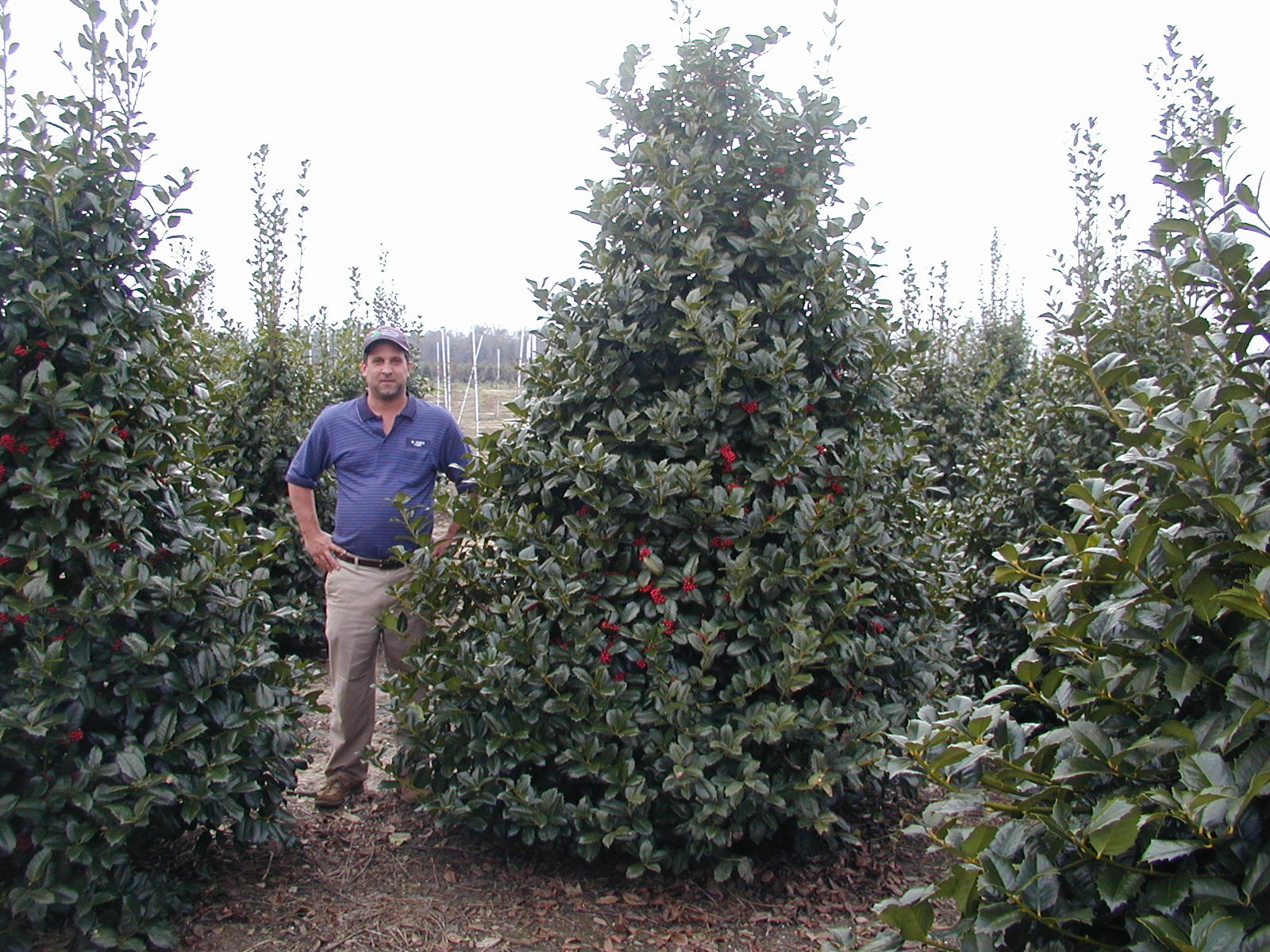
A specimen-grade Emily Bruner Holly at 8 to 12 feet — sourced from a specialty field grower and properly installed with adequate soil preparation — provides a functional, dense, year-round screen on the day the installation crew leaves the property. The root system that arrives with a field-grown specimen has been developing for years and establishes far more readily in the planting site. The visual density is present from day one, not deferred until an uncertain future date.

The specimen difference:

Every foot of installed height represents approximately one year of waiting eliminated. A 10-foot Emily Bruner Holly installed today delivers what a 3-foot nursery plant would require seven or more years to become — and it arrives already possessing the root mass and structural character to hold that height through establishment.


Aftercare: First Season Priorities

Emily Bruner Holly is low-maintenance once established, but the first growing season after installation is when consistent care pays the highest dividends:

  • Irrigation: Water deeply and consistently through the first summer — at minimum, one thorough watering per week during dry periods, more during extended drought. The root system is reestablishing from transplant and cannot yet access soil moisture as efficiently as an established plant.
  • Mulch: Apply 3 to 4 inches of organic mulch over the root zone, keeping it away from direct contact with the stem. Mulch conserves moisture, moderates soil temperature, and suppresses competing vegetation during establishment.
  • Fertilization: Hold off on fertilizing in the first season — promoting rapid new growth on a newly transplanted tree increases stress. Allow root establishment before pushing top growth.
  • Pruning: None needed in the first season. Emily Bruner Holly naturally maintains a dense, pyramidal form without pruning. If shaping is eventually desired, light pruning in late winter or early spring is appropriate after the first full growing season.

Emily Bruner Holly at Home & Garden Landscapes

Emily Bruner Holly is one of the most frequently installed plants in our privacy screening work across the Triangle region, and we maintain ongoing access to specimen-grade material at heights from 8 to 15 feet through our specialty grower network. We specify named cultivars in every written proposal, include soil preparation as a standard part of every installation scope, and provide specific aftercare guidance with every project.

If you are planning a privacy screen, replacing a failed Leyland cypress hedge, or considering any application where a reliable, year-round evergreen screen is needed across sun and shade conditions in the Triangle region, Emily Bruner Holly should be the starting point for your plant selection conversation.

Call 919-801-0211 to schedule your free consultation.
NC Licensed Landscape Contractor · NCLC #2591 · homeandgardenlandscapes.com

Filed Under: Blog, Plant Knowledge

The Best Privacy Trees for North Carolina Zone 7b

March 23, 2026 By admin

The Best Privacy Trees for North Carolina Zone 7b

If you are searching for privacy trees for a property in Raleigh, Durham, Chapel Hill, or anywhere in North Carolina’s Piedmont, you are gardening in USDA Hardiness Zone 7b — a zone defined by average annual minimum temperatures of 5°F to 10°F. That single number has significant implications for which privacy trees will perform reliably and which ones will struggle or fail.

Zone 7b is a demanding climate for screening plants. Summers are hot and humid, with extended drought pressure that stresses shallowly rooted trees. Winters bring occasional hard freezes that can damage cold-sensitive species. And the region’s heavy clay soils, while fertile, drain slowly and suffocate roots during wet periods. The best privacy trees for North Carolina’s Zone 7b are plants that have evolved to handle all of these conditions — not just one or two.

Below is a guide to the top-performing privacy screening plants for the Triangle region, based on decades of installation and observation in NC Piedmont landscapes.

What Makes a Good Privacy Tree for Zone 7b?

Before getting into specific plants, it helps to understand what separates a reliable privacy tree from one that looks good at the nursery but underperforms in the landscape. For Zone 7b, the key criteria are:

  • Cold hardiness to at least Zone 7 (tolerates minimum temperatures of 0°F to 10°F)
  • Heat and humidity tolerance — the ability to thrive through NC’s long, hot summers
  • Adaptability to clay soil and periodic drought
  • Dense, year-round evergreen foliage for continuous screening
  • Resistance to the major pests and diseases common in the Southeast
  • A mature height appropriate to the screening need (typically 15 feet or taller)

Deer resistance is also a significant practical consideration in the Triangle region, where residential deer pressure has increased substantially over the past two decades.

The Top Privacy Trees for NC Zone 7b


Plant

Height

Sun / Shade

Growth Rate

Zones

Deer Res.

Emily Bruner Holly

20–25 ft

Full sun to full shade

Moderate

6–9

Yes

Nellie Stevens Holly

15–25 ft

Full sun to part shade

Fast

6–9

Yes

Green Giant Arborvitae

40–60 ft

Full sun to part shade

3–5 ft/year

5–9

Moderate

Cryptomeria japonica

30–40 ft

Full sun to part shade

2–3 ft/year

5–9

Moderate

Southern Magnolia

60–80 ft

Full sun to part shade

Moderate

6–10

Yes

Leyland Cypress*

60–70 ft

Full sun

3–4 ft/year

6–10

No

* Leyland cypress included for reference. Not recommended due to widespread disease susceptibility in NC.


Emily Bruner Holly (Ilex × ‘Emily Bruner’)

Emily Bruner Holly is the top-recommended privacy screening plant for North Carolina landscapes, and the single best option for shaded or partially shaded sites. It is hardy in USDA Zones 6 through 9 — well within Zone 7b’s range — and performs reliably in conditions spanning from full sun to full shade, a versatility that no conifer can match.

At maturity, Emily Bruner Holly reaches 20 to 25 feet in height with a dense, broadly pyramidal form. Growth rate is moderate, meaning that installed specimens hold their shape and density without the aggressive pruning requirements of faster-growing plants. The foliage is deep, lustrous green year-round, with abundant red berries in winter that persist through the season and provide significant wildlife value.

Emily Bruner Holly is deer resistant, tolerates the clay soils common across the NC Piedmont, and shows no susceptibility to Seiridium canker, Botryosphaeria dieback, or the other pathogens that have devastated Leyland cypress hedges across the region. It is the preferred choice for screening along wooded property lines, north-facing exposures, and any site where reliable performance in shade is required.

Nellie Stevens Holly (Ilex × ‘Nellie R. Stevens’)

Nellie Stevens Holly is a fast-growing, densely branched evergreen holly that reaches 15 to 25 feet at maturity and performs well in full sun to partial shade. It is one of the most widely planted screening hollies in the Southeast, favored for its rapid establishment, consistent form, and low maintenance requirements once in the ground.

Hardy in Zones 6 through 9, Nellie Stevens Holly handles Zone 7b winters without difficulty and is well-adapted to the summer heat and clay soils of the NC Piedmont. The foliage is glossy, dark green, and exceptionally dense — providing solid year-round screening from installation. Like Emily Bruner, it is deer resistant and disease resistant.

Nellie Stevens Holly is the most common recommendation for sunny exposures — south and west-facing property lines, pool surrounds, and road-facing hedges where maximum light is available. For properties that need both sun and shade screening, a combination of Nellie Stevens in the sun and Emily Bruner in the shade provides seamless coverage across varying conditions.

Green Giant Arborvitae (Thuja plicata ‘Green Giant’)

Green Giant Arborvitae is the best conifer option for Zone 7b privacy screening and the closest available substitute for homeowners who want the tall, narrow, fast-growing form of a Leyland cypress without the disease problems. It can grow 3 to 5 feet per year in ideal conditions and reaches 40 to 60 feet at maturity — among the fastest and tallest of any privacy tree available in the region.

Hardy in Zones 5 through 9, Green Giant Arborvitae is significantly more disease-resistant than Leyland cypress and is not susceptible to Seiridium canker or Botryosphaeria dieback. It performs best in full sun to partial shade and tolerates a range of soil conditions, including the moderately wet clay soils common to the Piedmont. For large properties where rapid height and maximum eventual screening coverage are the priority, Green Giant is the most effective option available.

One important note: Green Giant Arborvitae offers only moderate deer resistance and may require protective measures in areas with high deer pressure.

Cryptomeria japonica

Cryptomeria japonica brings a refined texture and visual character to privacy screening that distinguishes it from the more utilitarian appearance of arborvitae or the bold glossiness of holly. The foliage is soft and feathery, the form is gracefully irregular at maturity, and the overall effect in the landscape is considerably more elegant than a standard conifer hedge.

Cryptomeria reaches 30 to 40 feet at maturity with a growth rate of 2 to 3 feet per year — fast enough to establish meaningful screening within a few seasons when planted at nursery size, or immediately when installed as a specimen-grade plant. It is hardy in Zones 5 through 9, performs well across the full range of Zone 7b conditions, and is far less susceptible to the disease and pest pressure that affects Leyland cypress.

Cryptomeria is an excellent choice for homeowners who want screening with genuine aesthetic appeal — particularly in landscapes where the privacy hedge is visible from living areas and needs to contribute positively to the overall design.

Southern Magnolia (Magnolia grandiflora)

Southern Magnolia is the most iconic large evergreen tree of the American South, and it is an underutilized privacy screening option in Zone 7b landscapes. At maturity, Magnolia grandiflora can reach 60 to 80 feet in height with a broad, dense canopy — making it one of the most effective large-scale privacy trees available in the region.

Multiple cultivars are available with varying size and form characteristics. Compact or columnar cultivars such as ‘Little Gem,’ ‘Bracken’s Brown Beauty,’ and ‘DD Blanchard’ offer more controlled growth habits suitable for residential screening applications, while standard-form specimens are appropriate for large-scale installations where maximum height and canopy mass are desired.

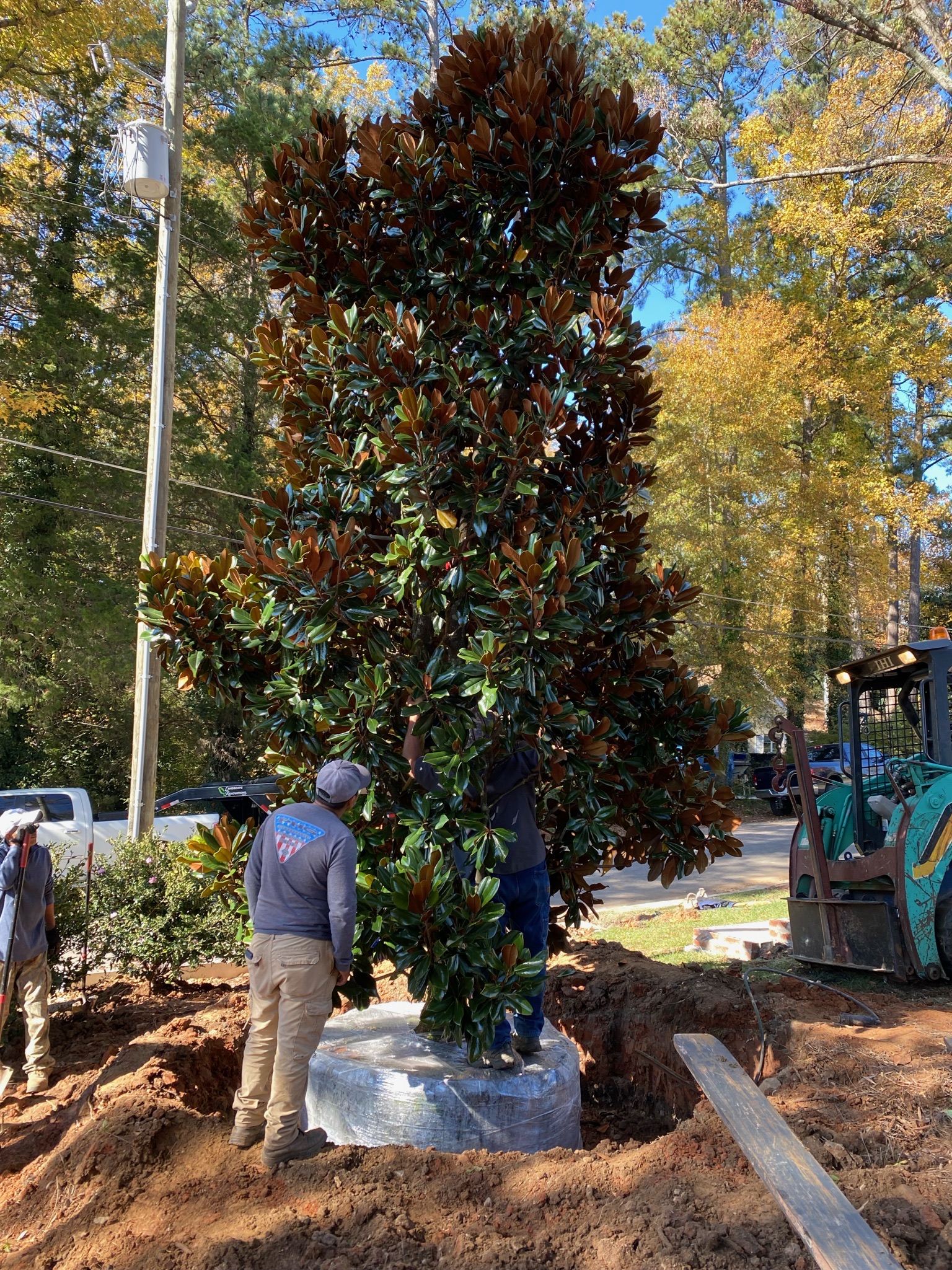
Southern Magnolia is fully hardy in Zone 7b, deer resistant, and highly drought tolerant once established. Installed at 8 to 20 feet in height, specimen magnolias provide immediate visual presence and screening while maturing into permanent landscape features that add significant property value.

What About Leyland Cypress?

Leyland cypress is included in the comparison table above for reference because it remains widely recognized as a privacy tree — and many homeowners in the Triangle region are actively searching for information about it, often because their existing hedge is failing.

We do not recommend Leyland cypress for new privacy screen installations in North Carolina. Seiridium canker and Botryosphaeria dieback have devastated established hedges across the region, and newly planted Leyland cypress faces the same disease pressure as the trees that are currently failing. The four alternatives above — Emily Bruner Holly, Nellie Stevens Holly, Green Giant Arborvitae, and Cryptomeria — all provide equal or superior screening without the vulnerability that has made Leyland cypress a costly problem for thousands of NC homeowners.

Does Planting Size Matter?

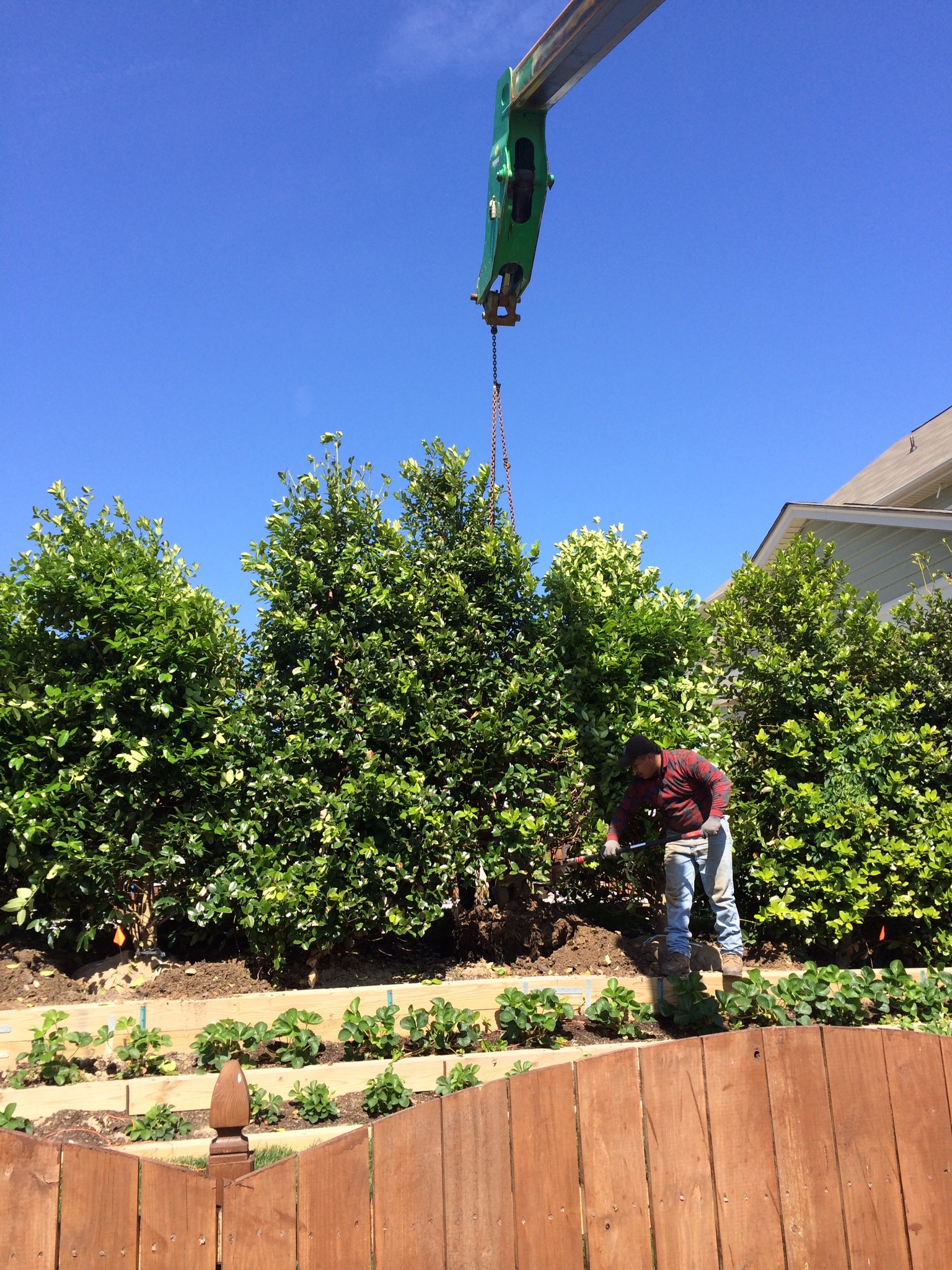
Significantly. Nursery-grade screening plants in 3- or 5-gallon containers are inexpensive, but they will take five to eight years to reach meaningful screening height under typical Zone 7b growing conditions. For homeowners who need privacy now — not in a decade — specimen-grade plants installed at 8 to 15 feet in height are the only way to achieve immediate results.

At Home & Garden Landscapes, we specialize in sourcing and installing mature, specimen-grade privacy plants across the Raleigh, Durham, and Chapel Hill area. When we install a privacy screen, it is a finished, functioning screen on the day our crew leaves your property — not a planting plan for the next decade.

Schedule a Free Privacy Screening Consultation

Every privacy screening project is different. The right plant depends on your sun and shade conditions, soil, spacing constraints, deer pressure, desired height, and the specific views you need to block. We offer free on-site consultations across the Triangle region to assess your property and recommend the right solution for your specific situation.

Call 919-801-0211 to schedule your free consultation.
NC Licensed Landscape Contractor · NCLC #2591 · homeandgardenlandscapes.com

Filed Under: Plant Knowledge, Privacy Screening, Uncategorized

Meet Sprout, Our AI Assistant!

Ask Sprout!

Sprout can answer many of your questions about your garden and landscaping, identify plants in photos you upload and provide you basic care instructions. Sprout is our newest family member and is an interactive AI chatbot trained on horticulture in the North Carolina Triangle. Click and give him a try!

When Is the Best Time to Plant in NC? Why Fall Is the Ideal Planting Season

After a long, hot Triangle summer, the drought is finally breaking — and for anyone who watched their landscape struggle through weeks of 90-degree heat and little rain, the timing could not be better. Because in the North Carolina Piedmont, the single best window of the entire year to plant trees and shrubs is not […]

Home & Garden Landscapes Special Offers

2026 Plant Sale

We’re pleased to offer a limited selection of larger Kousa Dogwoods and larger Eastern Red Buds in our special 2026 Plant Sale. Please call (919) 801-0211 for pricing and availability.            

The Sign of a Great Project Well Done

The Sign of a Great Project

What Our Customers Are Saying

We have worked with David on multiple projects. His knowledge, quality of plant material and service are top notch.  
Chris G.Greensboro, NC
The trees you brought us were way beyond what we expected. Thanks for over-delivering. We love them!
Rick & Arlene H.Chapel Hill, NC
David, we’re so happy with the new trees. Noah came home last night and loved them. Again, you rock. Thank you so much!
Kevin H.Chapel Hill, NC

The 18 foot hollies are amazing. They totally and instantly solved our view problem — rather than looking at a newly constructed commercial building, we now look out on lush green plantings.

Thomas & Pat B.Apex, NC
They over-delivered, came in on budget, and solved our privacy issues. We highly recommend them!  
Kim & Teresa S.Hillsborough, NC

Thank you so much for the wonderful tree installation you did last October. All 55 trees are doing wonderful and have added an incredible amount of color and variety to my property.

Chris C.Chapel Hill, NC
They’ve done multiple projects for me and the results have always been wonderful.  
Larua W.Chapel Hill, NC
We are beyond pleased! 
 
We are very happy with the tree, the shrubs and plants you chose for us. 
 
You did what you said you would do by staying on the job site and overseeing your hard working crew. 
 
Thank you for including us in the plan for the day and wanting our input.
 
You are so easy to work with. And, a true professional. We will 
highly recommend you and your company to anyone who asks us if we know a good landscape architect!
Karen & Steve L.Raleigh, NC
The hollies have done a wonderful job of giving us our valued privacy. We are so very happy. Thank you!
Chris & TrishaRaleigh, NC
The hollies you installed solved our privacy problem. We can now enjoy our backyard. Thanks!
Bob & PeggyWake Forest, NC

Stay Informed About Our Sales & News

Instagram

Call 919-801-0211

Email for More Information

Hillsborough, North Carolina


North Carolina Licensed Landscape Contractor

NCLC License #2591

North Carolina Department of Agriculture & Consumer Services Plant Pest Certificate 050-6298

Serving Customers Throughout North Carolina

Plus select customers in South Carolina and Virginia.

Orange County, Durham County, Wake County, Guilford County, Chatham County and Forsyth County.
Including the communities of
Chapel Hill, Carrboro, Hillsborough, Mebane, Raleigh, Durham, Wake Forest, Apex, Cary, Holly Springs, Fuquay Varina, Greensboro, Winston-Salem, High Point, Pittsboro and surrounding communities ...
Privacy Policy
Terms of Use

Accessibility

Copyright © 2026 Home & Garden Landscapes, Inc., All Rights Reserved