Home & Garden Landscapes

Creating beautiful landscapes in North Carolina and Virginia since 2002

Raleigh • Durham • Chapel Hill

Creative Landscaping Solutions
for Fine Properties Since 2002

Call 919-801-0211

  • Home
  • Services
    • Landscaping Installation Services
    • Hardscapes
    • Design Services
  • Portfolio
    • Residential Design & Installation
      • Curb Appeal
      • Backyard Retreat
      • Estates & Country Retreats
      • Screening & Privacy Solutions
      • Swimming Pool Retreats
      • Cold Hardy Palm Oasis
      • Lake & Waterfront Landscapes
    • Commercial & Institutional
    • Historic Landscape Restorations
  • Plant Catalog
    • Shade Trees
    • Ornamental & Flowering Trees
      • Crape Myrtles
      • Southern Magnolias
      • Camellias
      • Dogwoods
    • Holly
    • Coniferous Evergreens
      • Green Giants
      • Cryptomeria
      • Cedars
      • Spruce
      • Emerald Green Arborvitae
      • Eastern White Pine
    • Japanese Maples
    • Cold Hardy Palms
    • Mature Bamboo
  • FAQ
  • Extras
    • Resources
      • Plant Care Guides
      • Hardiness Zones
      • Fire Ant Quarantine Map
    • Big Tree Installation
    • American Elm Project
    • Our Cold-Hardy Palms
    • Videos
  • Our Team
  • Blog
  • Contact Us
You are here: Home / Blog

Privacy Fence vs. Privacy Plants: Which Is the Better Choice for Your NC Property?

April 9, 2026 By admin

Plantings or Fence for privacy screening photo

When a Triangle-area homeowner decides they need more privacy — whether from a new neighbor, a road, a pool exposure, or simply the density of a newer subdivision — the first question is almost always: fence or plants?

Both accomplish the same basic goal. Both have real advantages. And both have limitations that are easy to overlook when you are focused on solving the problem in front of you.

This is an honest comparison. We are a landscaping company, so we obviously believe in the value of privacy plantings — but we also know that a fence is sometimes the right answer, and we would rather help you make a well-informed decision than push you toward plants in a situation where a fence would serve you better.

What follows is the unvarnished comparison of both approaches across every factor that matters for a Triangle-area property.


The Direct Comparison

Factor

Privacy Fence

Privacy Plants

Time to full privacy

Immediate (day of installation)

Immediate with specimen-grade plants; 5–8 years with nursery stock

Upfront cost

$30–$65+ per linear foot installed

Varies by species and size; specimen-grade $100–$250 per vertical foot of coverage

Ongoing maintenance

Staining, painting, board replacement, post repair

Minimal once established; no annual painting or repairs; consistent watering important for the first 3 years

Maximum height

6–8 ft (most HOAs and codes)

15–40+ ft depending on species

Lifespan

15–25 years (wood); 30–50 years (vinyl/metal)

Indefinite — improves with age

Property value impact

Neutral to modest positive

Positive — mature plantings add measurable value

HOA restrictions

Common — many HOAs limit style, height, or prohibit entirely

Rarely restricted; plants generally permitted

Aesthetic character

Hard edge; defines boundary visually

Soft, natural; enhances rather than defines

Noise reduction

Minimal

Meaningful — dense plantings absorb sound

Wind buffering

Deflects wind — can create turbulence

Absorbs wind — more effective buffer


Where Fences Win

Immediate Privacy at Lower Upfront Cost (With Small Plants)

If the comparison is a privacy fence versus nursery-grade screening plants at 3 to 5 feet tall, the fence wins on speed decisively. A fence installed this week provides immediate privacy. Nursery-grade hollies or arborvitae will take five to eight years to reach the same visual coverage. Fences are good, however, for containment of pets. For homeowners on a tight budget who need privacy now, a fence is the pragmatic short-term solution.

The calculation shifts considerably when the comparison is fence versus specimen-grade plants installed at 8 to 12 feet. At that scale, mature specimen hollies provide immediate screening comparable to a fence — and the cost differential narrows significantly when you factor in fence maintenance over the same timeframe.

Defined Property Boundary

A fence has one advantage no plant screen can match: it is an unambiguous, legally visible property boundary marker. In situations where a clear delineation between properties is desired — particularly between neighbors with an ambiguous or contested boundary — a fence accomplishes something a plant screen cannot. Plants grow and shift over time; a fence is a fixed line.

Zero Establishment Period

A fence does not need to establish. It does not require watering through its first summer, it is not vulnerable to drought stress or deer browse during establishment, and it does not have a window of vulnerability between installation and full function. For rental properties, commercial sites, or situations where post-installation care cannot be guaranteed, a fence eliminates the establishment risk entirely.

Where Privacy Plants Win

No Height Ceiling

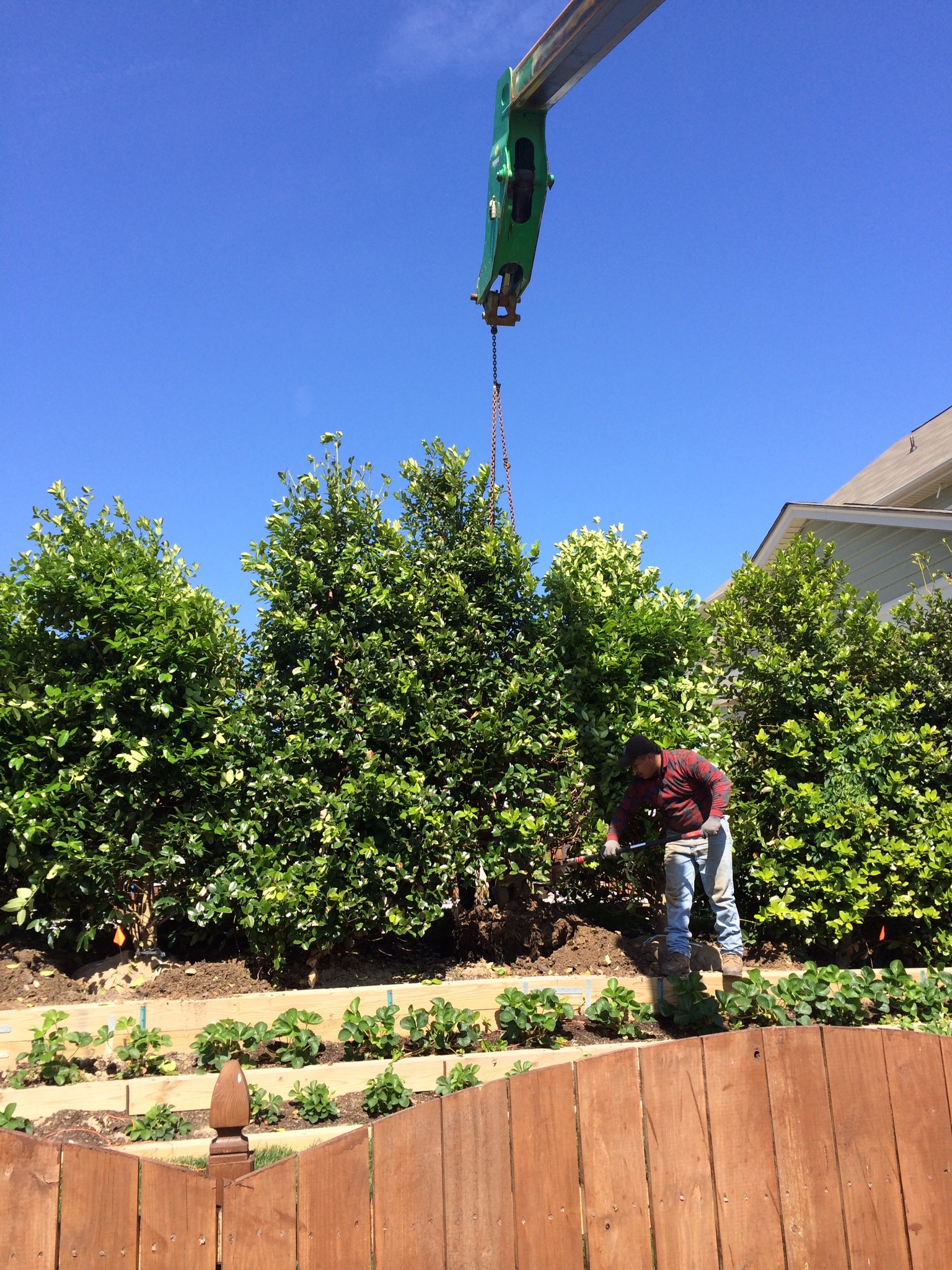
This is the most decisive practical advantage of privacy plants in most Triangle neighborhoods. North Carolina municipalities and most HOAs cap fence height at 6 to 8 feet — enough to block ground-level views but not enough to screen second-story windows, elevated decks, or adjacent two-story homes. Emily Bruner Holly reaches 20 to 25 feet. Cryptomeria reaches 20 to 30 feet. Green Giant Arborvitae can reach 20 to 40 feet. No fence can compete with this scale, and for many Triangle properties — particularly those with two-story neighbors or elevated exposure — fence height simply is not enough.

HOA Environments

Many Triangle HOAs restrict or prohibit privacy fences entirely — requiring specific styles, limiting heights below what is useful, or banning solid-panel fencing altogether. Privacy plantings are almost never restricted in the same way. If your HOA governs what you can build but not what you can plant, a living screen is not just the better choice — it may be the only choice.

Long-Term Value and Longevity

A wood privacy fence has a practical lifespan of 15 to 25 years before boards rot, posts fail, or the structure requires significant repair or replacement. A vinyl fence lasts longer but requires investment in a product that adds no ecological or aesthetic value to the property. A mature planting of Emily Bruner holly or cryptomeria, properly installed and established, is a permanent asset that improves with every passing year — denser, taller, and more valuable as a property feature as it matures.

Multiple studies have documented the positive effect of mature landscaping on residential property values, with the National Association of Realtors’ research consistently finding that mature plantings can add meaningful percentage points to appraised value. A fence adds little to none. A 15-foot holly hedge that has been in place for a decade is a different kind of asset entirely.

Noise and Wind Buffering

A solid fence deflects wind — which can create turbulence and noise on the lee side rather than reducing it. A dense planting of evergreen shrubs and trees absorbs wind and sound, providing meaningful noise reduction that a fence cannot match. For properties adjacent to roads, highways, or high-traffic areas, this difference is not trivial.

Aesthetic Character

A fence defines a boundary. A planting enriches a landscape. The difference is experiential: standing inside a backyard enclosed by an 8-foot wooden fence feels contained; standing inside a backyard enclosed by 12-foot hollies and framed by specimen trees feels like a garden. Both provide privacy. Only one provides a setting.

The specimen-grade reframe:

The fence-vs-plants debate most commonly assumes nursery-grade plants — small, slow, years from functional. When the comparison is fence vs. specimen-grade plants installed at 8 to 12 feet, the math and the timeline change entirely. Immediate privacy, no HOA conflict, no height ceiling, no maintenance cycle, and a permanent asset that grows more valuable every year.


Situation-by-Situation Guidance


Situation

Recommended Approach

Reasoning

HOA prohibits or restricts fences

Privacy plants

Plants are almost never restricted; fence is not an option

Need privacy above 8 feet

Privacy plants

Most codes cap fence height at 6–8 ft; mature hollies and cryptomeria reach 20–30 ft

Very tight lot with limited soil space

Fence (or narrow columnar plants)

Columnar hollies and ‘Alta’ magnolia can work; fence takes no soil space at all

Pool or outdoor living area needing enclosure

Plants (with fence option for safety code compliance)

Plants create resort aesthetic; pool safety codes may require fence regardless

Long rural or suburban boundary

Privacy plants

Fencing long runs is costly and high-maintenance; plantings are more cost-effective at scale

Immediate privacy needed, limited budget

Fence (short-term) + plants (long-term)

Fence provides immediate cover while plantings establish; fence removed when plants reach height


The Combination Approach: Fence Now, Plants for the Long Term

For homeowners who need immediate privacy but are working with a budget that does not allow for full specimen-grade installation, the combination approach is worth considering: install a fence now to solve the immediate problem, and plant a privacy screen behind it or alongside it that will eventually exceed the fence’s height. When the plants reach functional screening height — typically three to five years for well-sized nursery material — the fence can be removed if desired.

This approach is particularly effective for new construction situations where the property is fully exposed and the homeowner wants privacy immediately but is also investing in a long-term landscape. The fence provides the bridge; the plants provide the permanent solution.

What the Best Triangle Privacy Screens Actually Look Like

The most effective privacy screens we install across the Raleigh, Durham, and Chapel Hill area share a few consistent characteristics:

  • Specimen-grade plant material at 8 to 12 feet at installation, providing immediate visual density rather than a gap-filled row of small plants
  • Species matched to site conditions — Emily Bruner Holly for shaded or mixed sun/shade exposures; Nellie Stevens Holly for full-sun boundaries; Green Giant where a refined, textural conifer screen is desired
  • Staggered planting in a slight zigzag pattern where lot width allows, creating faster visual density and a more naturalistic appearance than a single-row hedge
  • Installed without the height limitation that makes every fence eventually inadequate for two-story exposures, elevated decks, and neighboring second floors

In most Triangle scenarios — particularly where HOA restrictions apply, where two-story privacy is needed, or where long-term value is a priority — a well-installed specimen privacy screen outperforms a fence on every measure that matters over five or more years.

Ready to Explore Your Options?

Home & Garden Landscapes offers free on-site consultations throughout the Raleigh, Durham, Chapel Hill, Cary, Apex, Wake Forest, and greater Triangle region. We will assess your specific site — sun, shade, soil, HOA requirements, neighbor exposure, and budget — and give you an honest recommendation on which approach, or combination of approaches, makes the most sense for your property.

Call 919-801-0211 to schedule your free privacy consultation.

NC Licensed Landscape Contractor · NCLC #2591 · homeandgardenlandscapes.com
Filed Under: Privacy Screening Tagged With: Privacy Screening

Tree Rescue — How We Moved a Beautiful Japanese Maple to a New Home

April 3, 2026 By admin

Some trees are too good to lose.

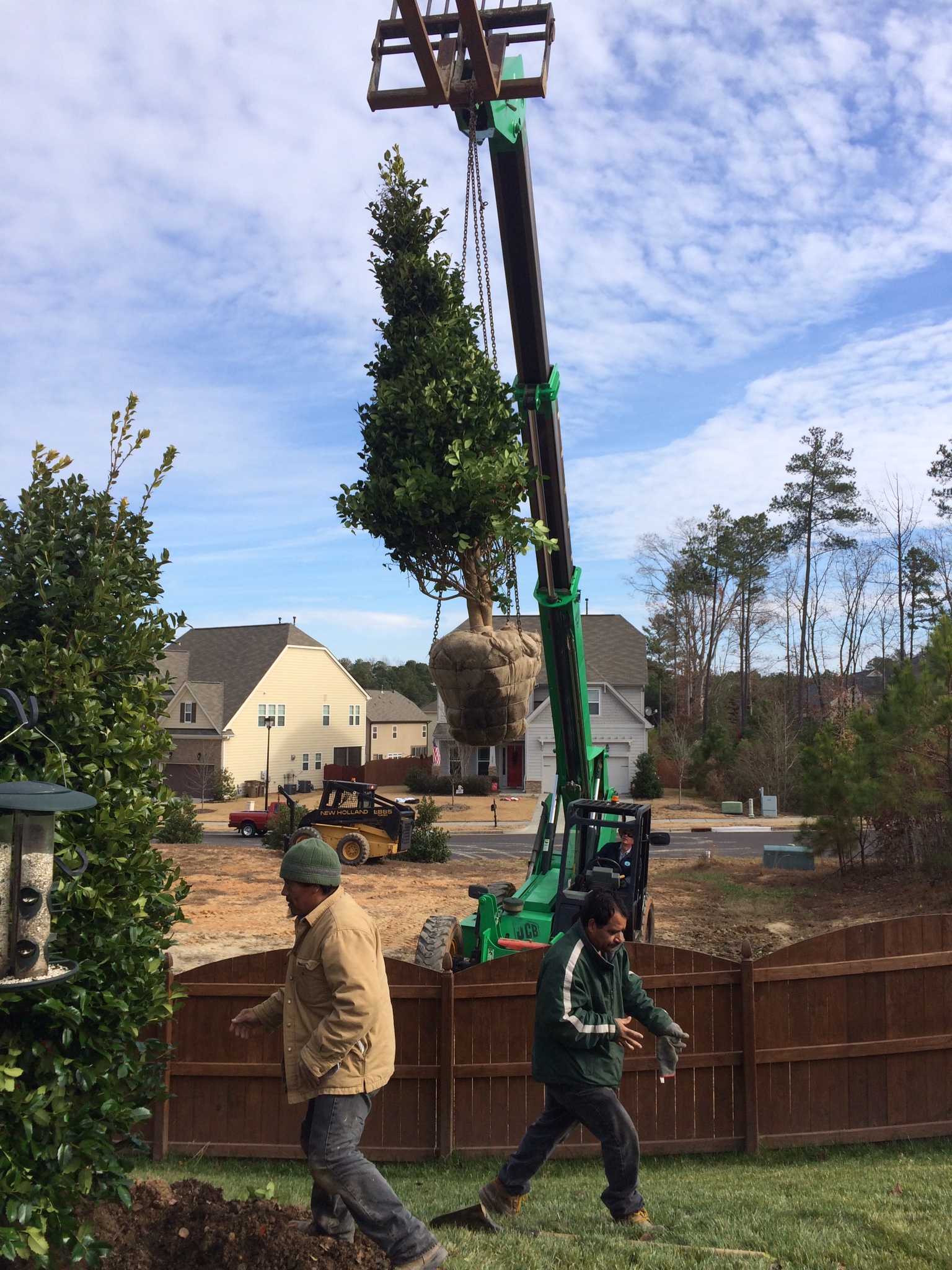
When a homeowner’s renovation plans called for removing a mature Japanese maple from its longtime spot in the garden, the tree had everything going for it: a graceful multi-trunk form, beautifully layered branching, and the kind of presence that takes years — sometimes decades — to develop. Removing it was out of the question. Relocating it was the answer.

That’s exactly what our Tree Rescue service is built for.

Using our heavy equipment, the Home & Garden Landscapes crew excavated the root ball, carefully loaded the tree, and transported it to its new planting location — where it arrived intact, healthy, and ready to establish in a spot where it can be enjoyed for years to come.

Japanese maples are among the most rewarding ornamental trees for NC Piedmont landscapes, but they’re also among the slowest-growing. A mature, multi-trunk specimen like this one represents a significant investment of time that simply cannot be replaced by planting something new. When a client’s project requires moving one, we treat it with exactly the care that investment deserves.

📞 Call 919-801-0211 to talk through all your landscaping needs.

Home & Garden Landscapes · NC Licensed Landscape Contractor · NCLC #2591 · homeandgardenlandscapes.comS

Filed Under: Uncategorized, Video

The Best Privacy Trees for North Carolina Zone 7b

March 23, 2026 By admin

The Best Privacy Trees for North Carolina Zone 7b

If you are searching for privacy trees for a property in Raleigh, Durham, Chapel Hill, or anywhere in North Carolina’s Piedmont, you are gardening in USDA Hardiness Zone 7b — a zone defined by average annual minimum temperatures of 5°F to 10°F. That single number has significant implications for which privacy trees will perform reliably and which ones will struggle or fail.

Zone 7b is a demanding climate for screening plants. Summers are hot and humid, with extended drought pressure that stresses shallowly rooted trees. Winters bring occasional hard freezes that can damage cold-sensitive species. And the region’s heavy clay soils, while fertile, drain slowly and suffocate roots during wet periods. The best privacy trees for North Carolina’s Zone 7b are plants that have evolved to handle all of these conditions — not just one or two.

Below is a guide to the top-performing privacy screening plants for the Triangle region, based on decades of installation and observation in NC Piedmont landscapes.

What Makes a Good Privacy Tree for Zone 7b?

Before getting into specific plants, it helps to understand what separates a reliable privacy tree from one that looks good at the nursery but underperforms in the landscape. For Zone 7b, the key criteria are:

  • Cold hardiness to at least Zone 7 (tolerates minimum temperatures of 0°F to 10°F)
  • Heat and humidity tolerance — the ability to thrive through NC’s long, hot summers
  • Adaptability to clay soil and periodic drought
  • Dense, year-round evergreen foliage for continuous screening
  • Resistance to the major pests and diseases common in the Southeast
  • A mature height appropriate to the screening need (typically 15 feet or taller)

Deer resistance is also a significant practical consideration in the Triangle region, where residential deer pressure has increased substantially over the past two decades.

The Top Privacy Trees for NC Zone 7b


Plant

Height

Sun / Shade

Growth Rate

Zones

Deer Res.

Emily Bruner Holly

20–25 ft

Full sun to full shade

Moderate

6–9

Yes

Nellie Stevens Holly

15–25 ft

Full sun to part shade

Fast

6–9

Yes

Green Giant Arborvitae

40–60 ft

Full sun to part shade

3–5 ft/year

5–9

Moderate

Cryptomeria japonica

30–40 ft

Full sun to part shade

2–3 ft/year

5–9

Moderate

Southern Magnolia

60–80 ft

Full sun to part shade

Moderate

6–10

Yes

Leyland Cypress*

60–70 ft

Full sun

3–4 ft/year

6–10

No

* Leyland cypress included for reference. Not recommended due to widespread disease susceptibility in NC.


Emily Bruner Holly (Ilex × ‘Emily Bruner’)

Emily Bruner Holly is the top-recommended privacy screening plant for North Carolina landscapes, and the single best option for shaded or partially shaded sites. It is hardy in USDA Zones 6 through 9 — well within Zone 7b’s range — and performs reliably in conditions spanning from full sun to full shade, a versatility that no conifer can match.

At maturity, Emily Bruner Holly reaches 20 to 25 feet in height with a dense, broadly pyramidal form. Growth rate is moderate, meaning that installed specimens hold their shape and density without the aggressive pruning requirements of faster-growing plants. The foliage is deep, lustrous green year-round, with abundant red berries in winter that persist through the season and provide significant wildlife value.

Emily Bruner Holly is deer resistant, tolerates the clay soils common across the NC Piedmont, and shows no susceptibility to Seiridium canker, Botryosphaeria dieback, or the other pathogens that have devastated Leyland cypress hedges across the region. It is the preferred choice for screening along wooded property lines, north-facing exposures, and any site where reliable performance in shade is required.

Nellie Stevens Holly (Ilex × ‘Nellie R. Stevens’)

Nellie Stevens Holly is a fast-growing, densely branched evergreen holly that reaches 15 to 25 feet at maturity and performs well in full sun to partial shade. It is one of the most widely planted screening hollies in the Southeast, favored for its rapid establishment, consistent form, and low maintenance requirements once in the ground.

Hardy in Zones 6 through 9, Nellie Stevens Holly handles Zone 7b winters without difficulty and is well-adapted to the summer heat and clay soils of the NC Piedmont. The foliage is glossy, dark green, and exceptionally dense — providing solid year-round screening from installation. Like Emily Bruner, it is deer resistant and disease resistant.

Nellie Stevens Holly is the most common recommendation for sunny exposures — south and west-facing property lines, pool surrounds, and road-facing hedges where maximum light is available. For properties that need both sun and shade screening, a combination of Nellie Stevens in the sun and Emily Bruner in the shade provides seamless coverage across varying conditions.

Green Giant Arborvitae (Thuja plicata ‘Green Giant’)

Green Giant Arborvitae is the best conifer option for Zone 7b privacy screening and the closest available substitute for homeowners who want the tall, narrow, fast-growing form of a Leyland cypress without the disease problems. It can grow 3 to 5 feet per year in ideal conditions and reaches 40 to 60 feet at maturity — among the fastest and tallest of any privacy tree available in the region.

Hardy in Zones 5 through 9, Green Giant Arborvitae is significantly more disease-resistant than Leyland cypress and is not susceptible to Seiridium canker or Botryosphaeria dieback. It performs best in full sun to partial shade and tolerates a range of soil conditions, including the moderately wet clay soils common to the Piedmont. For large properties where rapid height and maximum eventual screening coverage are the priority, Green Giant is the most effective option available.

One important note: Green Giant Arborvitae offers only moderate deer resistance and may require protective measures in areas with high deer pressure.

Cryptomeria japonica

Cryptomeria japonica brings a refined texture and visual character to privacy screening that distinguishes it from the more utilitarian appearance of arborvitae or the bold glossiness of holly. The foliage is soft and feathery, the form is gracefully irregular at maturity, and the overall effect in the landscape is considerably more elegant than a standard conifer hedge.

Cryptomeria reaches 30 to 40 feet at maturity with a growth rate of 2 to 3 feet per year — fast enough to establish meaningful screening within a few seasons when planted at nursery size, or immediately when installed as a specimen-grade plant. It is hardy in Zones 5 through 9, performs well across the full range of Zone 7b conditions, and is far less susceptible to the disease and pest pressure that affects Leyland cypress.

Cryptomeria is an excellent choice for homeowners who want screening with genuine aesthetic appeal — particularly in landscapes where the privacy hedge is visible from living areas and needs to contribute positively to the overall design.

Southern Magnolia (Magnolia grandiflora)

Southern Magnolia is the most iconic large evergreen tree of the American South, and it is an underutilized privacy screening option in Zone 7b landscapes. At maturity, Magnolia grandiflora can reach 60 to 80 feet in height with a broad, dense canopy — making it one of the most effective large-scale privacy trees available in the region.

Multiple cultivars are available with varying size and form characteristics. Compact or columnar cultivars such as ‘Little Gem,’ ‘Bracken’s Brown Beauty,’ and ‘DD Blanchard’ offer more controlled growth habits suitable for residential screening applications, while standard-form specimens are appropriate for large-scale installations where maximum height and canopy mass are desired.

Southern Magnolia is fully hardy in Zone 7b, deer resistant, and highly drought tolerant once established. Installed at 8 to 20 feet in height, specimen magnolias provide immediate visual presence and screening while maturing into permanent landscape features that add significant property value.

What About Leyland Cypress?

Leyland cypress is included in the comparison table above for reference because it remains widely recognized as a privacy tree — and many homeowners in the Triangle region are actively searching for information about it, often because their existing hedge is failing.

We do not recommend Leyland cypress for new privacy screen installations in North Carolina. Seiridium canker and Botryosphaeria dieback have devastated established hedges across the region, and newly planted Leyland cypress faces the same disease pressure as the trees that are currently failing. The four alternatives above — Emily Bruner Holly, Nellie Stevens Holly, Green Giant Arborvitae, and Cryptomeria — all provide equal or superior screening without the vulnerability that has made Leyland cypress a costly problem for thousands of NC homeowners.

Does Planting Size Matter?

Significantly. Nursery-grade screening plants in 3- or 5-gallon containers are inexpensive, but they will take five to eight years to reach meaningful screening height under typical Zone 7b growing conditions. For homeowners who need privacy now — not in a decade — specimen-grade plants installed at 8 to 15 feet in height are the only way to achieve immediate results.

At Home & Garden Landscapes, we specialize in sourcing and installing mature, specimen-grade privacy plants across the Raleigh, Durham, and Chapel Hill area. When we install a privacy screen, it is a finished, functioning screen on the day our crew leaves your property — not a planting plan for the next decade.

Schedule a Free Privacy Screening Consultation

Every privacy screening project is different. The right plant depends on your sun and shade conditions, soil, spacing constraints, deer pressure, desired height, and the specific views you need to block. We offer free on-site consultations across the Triangle region to assess your property and recommend the right solution for your specific situation.

Call 919-801-0211 to schedule your free consultation.

NC Licensed Landscape Contractor · NCLC #2591 · homeandgardenlandscapes.com
Filed Under: Plant Knowledge, Privacy Screening, Uncategorized

2026 Plant Sale

January 9, 2026 By admin

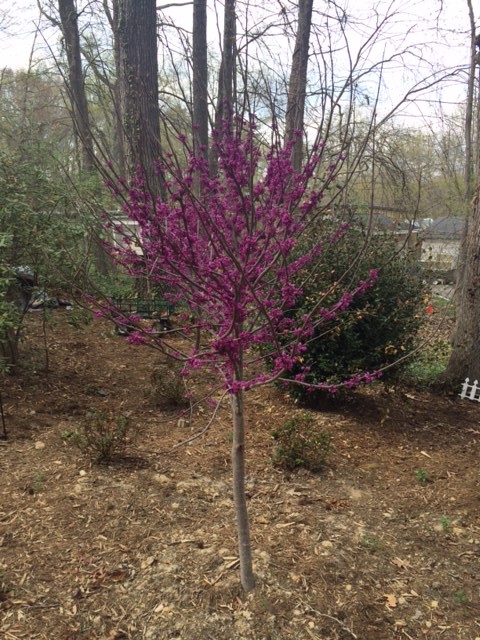
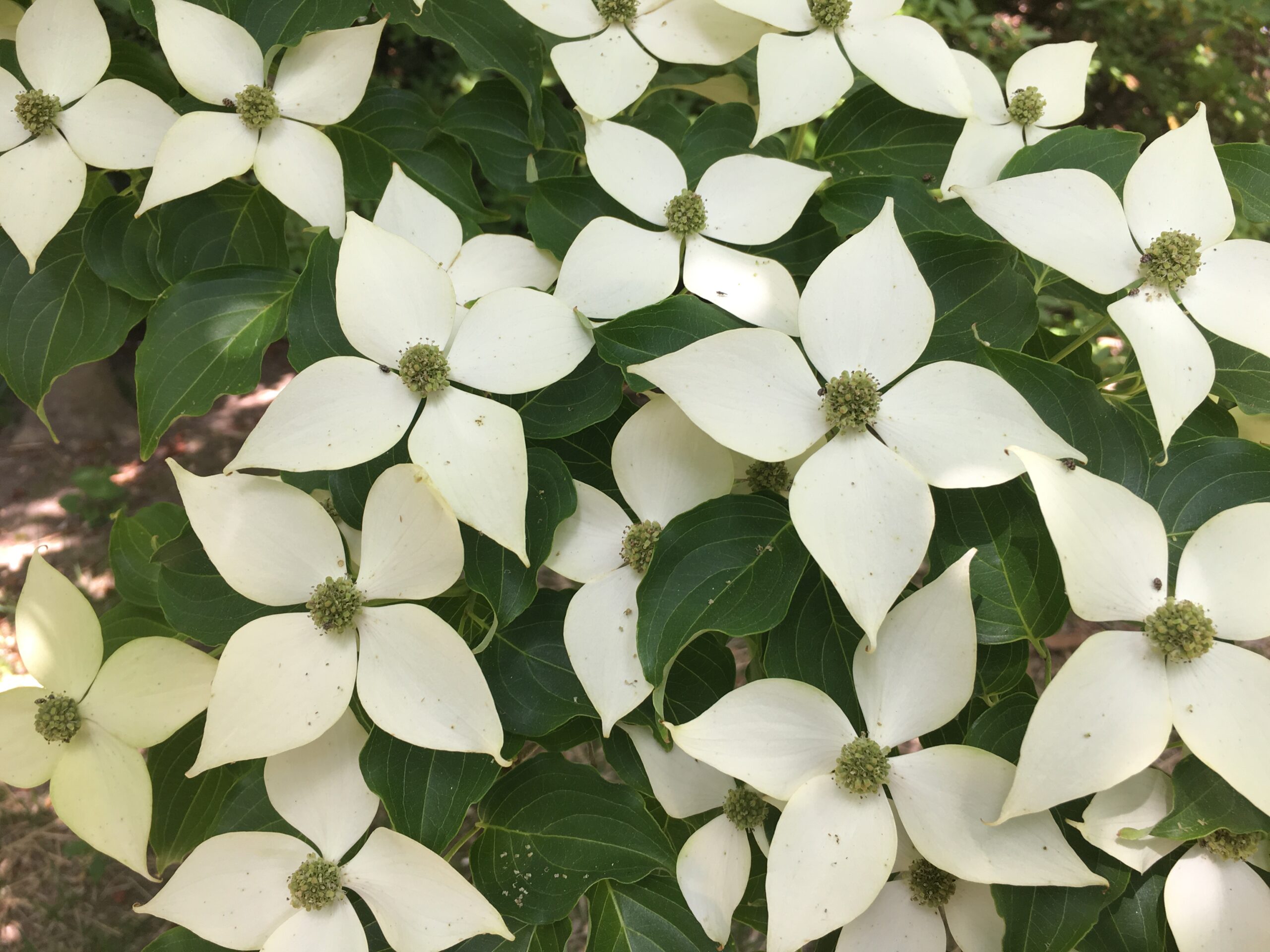
We’re pleased to offer a limited selection of larger Kousa Dogwoods and larger Eastern Red Buds in our special 2026 Plant Sale. Please call (919) 801-0211 for pricing and availability.


Kousa Dougwood (May blooming) flowering in Raleigh, NC
 

Photo of Photo of Eastern Red Bud in bloom
Eastern Red Bud


Filed Under: Sale, Uncategorized

Transforming a 1950s Landscape in Raleigh, NC: A Complete Curb Appeal Renovation

October 27, 2025 By admin

Join David from Home & Garden Landscapes in Raleigh, North Carolina, for one of his favorite projects — a full landscape renovation of a 1950s home. The original yard was overgrown and filled with the wrong plants for the space, so David and his team removed massive old foundation trees and reimagined the design for modern curb appeal.

New plantings include Limelight Hydrangeas, Tea Olive (Osmanthus) for winter fragrance, Pugster Blue Butterfly Bush, evergreen hollies, and Camellia sasanqua ‘Yuletide’ — a brilliant shrub that blooms from late October through Christmas.

Homeowner Hillary, whose parents will be moving into the home, was thrilled with the results and added her own touch by requesting more Camellias for extra color.

Watch as the team transforms an outdated landscape into a vibrant, low-maintenance garden that highlights the home’s timeless charm and shows how thoughtful design can completely refresh an older property.

#LandscapeRenovation #RaleighLandscaping #CurbAppeal #HomeAndGardenLandscapes

Filed Under: Project, Video Tagged With: Video

  • 1
  • 2
  • 3
  • …
  • 6
  • Next Page »

Home & Garden Landscapes Special Offers

2026 Plant Sale

We’re pleased to offer a limited selection of larger Kousa Dogwoods and larger Eastern Red Buds in our special 2026 Plant Sale. Please call (919) 801-0211 for pricing and availability.            

The Sign of a Great Project Well Done

The Sign of a Great Project

What Our Customers Are Saying

We are beyond pleased! 
 
We are very happy with the tree, the shrubs and plants you chose for us. 
 
You did what you said you would do by staying on the job site and overseeing your hard working crew. 
 
Thank you for including us in the plan for the day and wanting our input.
 
You are so easy to work with. And, a true professional. We will 
highly recommend you and your company to anyone who asks us if we know a good landscape architect!
Karen & Steve L.Raleigh, NC

Thank you so much for the wonderful tree installation you did last October. All 55 trees are doing wonderful and have added an incredible amount of color and variety to my property.

Chris C.Chapel Hill, NC
We have worked with David on multiple projects. His knowledge, quality of plant material and service are top notch.  
Chris G.Greensboro, NC
The hollies you installed solved our privacy problem. We can now enjoy our backyard. Thanks!
Bob & PeggyWake Forest, NC
The trees you brought us were way beyond what we expected. Thanks for over-delivering. We love them!
Rick & Arlene H.Chapel Hill, NC
David, we’re so happy with the new trees. Noah came home last night and loved them. Again, you rock. Thank you so much!
Kevin H.Chapel Hill, NC
The hollies have done a wonderful job of giving us our valued privacy. We are so very happy. Thank you!
Chris & TrishaRaleigh, NC
They over-delivered, came in on budget, and solved our privacy issues. We highly recommend them!  
Kim & Teresa S.Hillsborough, NC
They’ve done multiple projects for me and the results have always been wonderful.  
Larua W.Chapel Hill, NC

The 18 foot hollies are amazing. They totally and instantly solved our view problem — rather than looking at a newly constructed commercial building, we now look out on lush green plantings.

Thomas & Pat B.Apex, NC

Stay Informed About Our Sales & News

Instagram

Call 919-801-0211

Email for More Information

Hillsborough, North Carolina


North Carolina Licensed Landscape Contractor

NCLC License #2591

North Carolina Department of Agriculture & Consumer Services Plant Pest Certificate 050-6298

Serving Customers Throughout North Carolina

Plus select customers in South Carolina and Virginia.

Orange County, Durham County, Wake County, Guilford County, Chatham County and Forsyth County.
Including the communities of
Chapel Hill, Carrboro, Hillsborough, Mebane, Raleigh, Durham, Wake Forest, Apex, Cary, Holly Springs, Fuquay Varina, Greensboro, Winston-Salem, High Point, Pittsboro and surrounding communities ...
Privacy Policy
Terms of Use

Accessibility

Copyright © 2026 Home & Garden Landscapes, Inc., All Rights Reserved