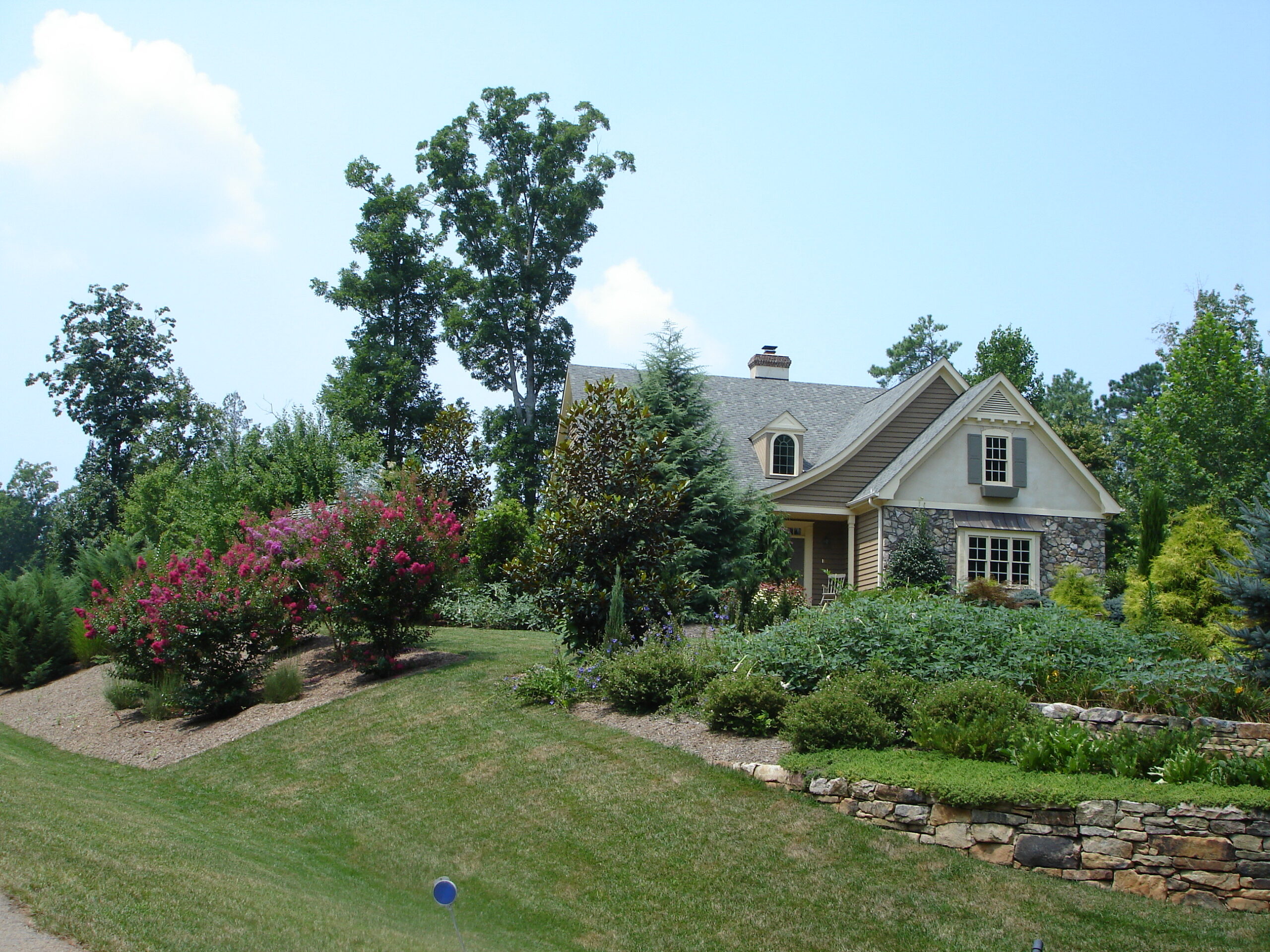
Most landscape renovation projects in the Triangle region start the same way: a homeowner looks at their property and realizes that what was planted five, ten, or twenty years ago no longer reflects where they are today. Maybe the Leyland cypress hedge that once defined the backyard is dying in sections. Maybe the foundation shrubs that came with the house are now blocking the first-floor windows. Maybe the builder-grade plantings that looked acceptable when they moved in have grown into a monotonous wall of undifferentiated green that does nothing for the home’s appearance.
Whatever the trigger, the desire is the same: a landscape that looks intentional, well-considered, and finished — not a collection of plants waiting to become a landscape. This guide covers the most common renovation challenges we address across the Raleigh, Durham, and Chapel Hill area and the approach that produces immediate, lasting results.
Why Most Landscape Renovations Underperform
The most common mistake in landscape renovation is treating it like a nursery run — removing what is not working and replacing it with small, inexpensive plants that will take years to establish. The result is a yard that looks stripped for the first several seasons and never quite achieves the full, mature character that was imagined.
The alternative is a renovation approach built around mature, specimen-grade plant material — the same philosophy that drives our privacy screening and specimen tree installations. When the plants go in at meaningful sizes, the renovation is visible and gratifying from day one. The landscape looks finished because it is finished, not because it will be finished in a decade.
This distinction shapes every decision we make in a renovation consultation: which plants to remove versus retain, what to plant as replacements, and what size to install — because the size determines whether the investment delivers immediate results or deferred ones.
The Most Common Renovation Challenges in the Triangle
|
Common Problem |
Typical Cause |
Recommended Solution |
|
Failed Leyland cypress hedge |
Seiridium canker, Botryosphaeria dieback |
Full removal and replacement with Emily Bruner Holly, Nellie Stevens, or Green Giant at specimen size |
|
Overgrown foundation shrubs |
Incorrect species for space; lack of pruning |
Removal and replacement with correctly scaled species; minimal shearing required |
|
Bare, featureless front yard |
New construction; removed trees; aging builder plantings |
Specimen focal tree (magnolia, Japanese maple, crape myrtle) as structural anchor, layered with evergreen foundation plants |
|
Missing privacy from road or neighbors |
Open lot, cleared buffer, new construction |
Specimen-grade privacy screening installed at functional height on day one |
|
Dated or monotonous planting palette |
Builder-grade shrubs; lack of seasonal interest |
Selective removal and replacement with varied textures, multi-season ornamentals, and specimen accents |
How to Approach a Landscape Renovation
Step 1: Honest Assessment — What Stays and What Goes
The first decision in any renovation is which existing plants to retain. Not everything in an aging landscape needs to go. Mature trees with good structure, healthy established shrubs in appropriate locations, and any plantings that contribute genuine character to the property are worth preserving and incorporating into the new design.
What typically needs to go: dying or diseased plant material, overgrown shrubs blocking windows or pathways, plants in the wrong location for their mature size, invasive species, and any failed hedge material where the disease or pest pressure is likely to persist in the soil. The assessment process requires knowledge of what can be salvaged and what represents a liability — which is one reason a professional consultation before purchasing any plant material is worth the time.
Step 2: Understand the Soil and Site Before Planting
The Triangle’s heavy clay soils, new construction compaction issues, and variable drainage patterns mean that what goes into the ground before planting is often as important as what gets planted. Failed plantings in renovation projects are frequently not a species problem — they are a drainage and/or soil problem that was never addressed.
Step 3: Start with Structure, Then Layer Detail
Effective renovation design follows the same logic as effective new landscape design: establish the structural framework first, then layer in detail. Structure means the large, permanent elements — specimen trees, privacy screening, evergreen backdrops — that define the space and hold it together through all seasons. Detail means the smaller-scale plantings, seasonal color, and textural accents that give the landscape character and interest.
The most common design error in renovation projects is the reverse approach: adding detail plants without establishing structure. A front yard with new perennials and annual color but no specimen focal tree and no evergreen framework looks busy in summer and bleak in winter. The same yard with a multi-trunk ‘Bracken’s Brown Beauty’ Southern Magnolia as a structural anchor, a well-placed Japanese maple for seasonal interest, and a cohesive evergreen foundation looks intentional and complete year-round.
Step 4: Replace at the Right Size
Every renovation involves a choice: plant at nursery size and wait, or plant at specimen size and see results immediately. The cost difference between a 3-gallon shrub and an 8-foot specimen of the same species is real. But so is the difference between a renovation that looks finished and one that looks like a work in progress for the next five years. If your site has issues with deer, larger plantings are more tolerant whereas smaller materials frequently serve as a deer salad bar.
For the highest-visibility elements of a renovation — the specimen focal tree at the front entry, the privacy screening along the backyard boundary, the foundation anchor at the corner of the house — specimen-grade installation is almost always the right call. For filler plantings in less prominent locations, smaller material may be appropriate. The art of renovation design is knowing which elements merit the investment in immediate impact and which ones can grow in over time.
Common Renovation Scenarios: What We See Across the Triangle
Leyland Cypress Replacement
Replacing a failing Leyland cypress privacy screen is one of the most common renovation projects we complete across the Triangle region. The approach depends on the degree of failure: a hedge in early decline can sometimes be replaced in sections, maintaining partial screening while new plantings establish. A hedge with widespread Seiridium canker requires full removal — including stumps and roots — before any new plantings go in.
For most Leyland replacement projects, we install mature Emily Bruner Holly or Nellie Stevens Holly at 8 to 12 feet, with Cryptomeria or Green Giant Arborvitae as alternatives depending on site conditions. The result is a functioning privacy screen on installation day, not a gap-filled hedgerow waiting for small plants to grow together.
Foundation Planting Renovation
Builder-grade foundation plantings are among the most dated and most common renovation candidates in Triangle neighborhoods. The typical scenario: a mix of ornamental hollies, Lorapetulum, and ornamental grasses installed at the time of construction that has now grown beyond its intended scale, blocking windows, overwhelming the entry, and creating a monotonous wall effect.
Renovation starts with identifying what the planting is actually trying to accomplish — frame the entry, provide year-round structure, soften the foundation — and then selecting species scaled to those goals. Compact magnolia cultivars, appropriately sized hollies, and well-chosen ornamental trees as focal anchors typically outperform the original plantings in every dimension: scale, seasonal interest, maintenance requirements, and overall contribution to the home’s appearance.
The Bare or Featureless Front Yard
New construction often leaves homeowners with a front yard that has a lawn and very little else — perhaps a few builder-placed shrubs near the foundation and nothing of scale or character to anchor the property. This is one of the most satisfying renovation scenarios because the solution is additive rather than corrective: one well-chosen specimen tree in the right location can transform the entire character of a front yard in a single installation.
A multi-trunk ‘Natchez’ crape myrtle as a driveway specimen, a ‘Bracken’s Brown Beauty’ magnolia as a front lawn anchor, or a weeping Japanese maple as an entry focal point — installed at mature specimen size — delivers the kind of immediate curb appeal impact that no amount of annuals and mulch can replicate.
What a Renovation Consultation Looks Like
Every renovation project begins with a free on-site consultation that covers: an honest assessment of existing plant material (what to keep, what to remove), soil conditions and any preparation needed, specific recommendations for replacement species and sizes, and a clear scope of work. We do not bring a catalog and ask homeowners to choose; we bring horticultural expertise and make specific recommendations based on the specific conditions of the site.
|
The renovation guarantee: When we leave your property, the landscape should look better than it did the day before we arrived — not like it is waiting to look better. That is the standard we hold ourselves to on every renovation project we complete in the Triangle region. |
Ready to Renovate?
Home & Garden Landscapes has been completing landscape renovations across the Raleigh, Durham, Chapel Hill, Cary, Apex, Wake Forest, and greater Triangle region since 2002. We bring 22+ years of horticultural expertise, access to specimen-grade plant material at sizes that deliver immediate results, and a design approach that prioritizes lasting character over short-term convenience.
Whether your renovation is a single failed hedge replacement or a complete property overhaul, the process starts with a free on-site consultation.
Call 919-801-0211 to schedule your free consultation.
NC Licensed Landscape Contractor · NCLC #2591 · homeandgardenlandscapes.com